
Steve Jobs In Exile
Thoughts on a recent talk at the Computer History Museum
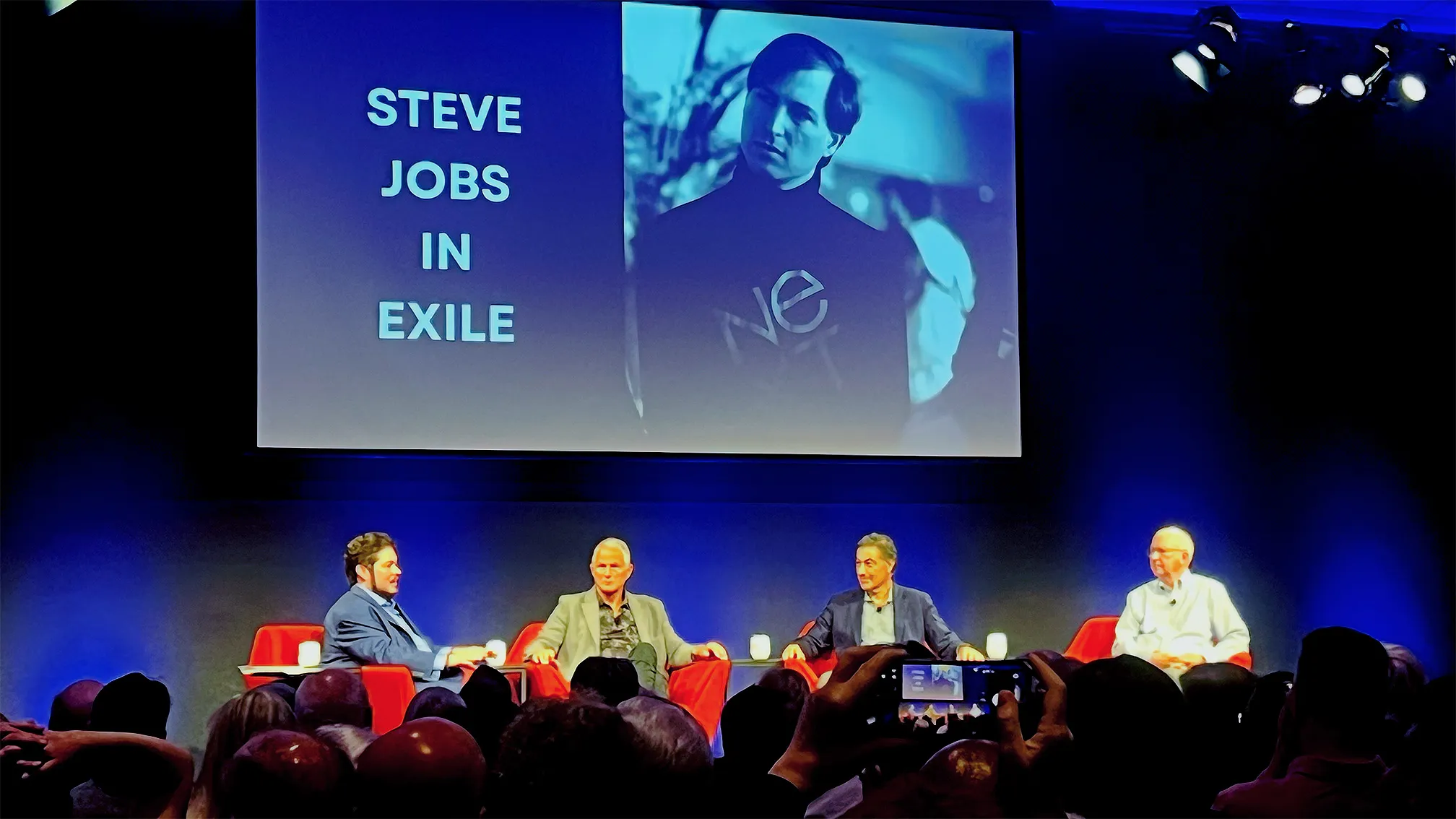
I recently attended a talk at the Computer History Museum on the twelve-year period when Steve Jobs left Apple, founded NeXT Computing, and returned to Apple.
You can watch a recording of the talk here:
Speakers:
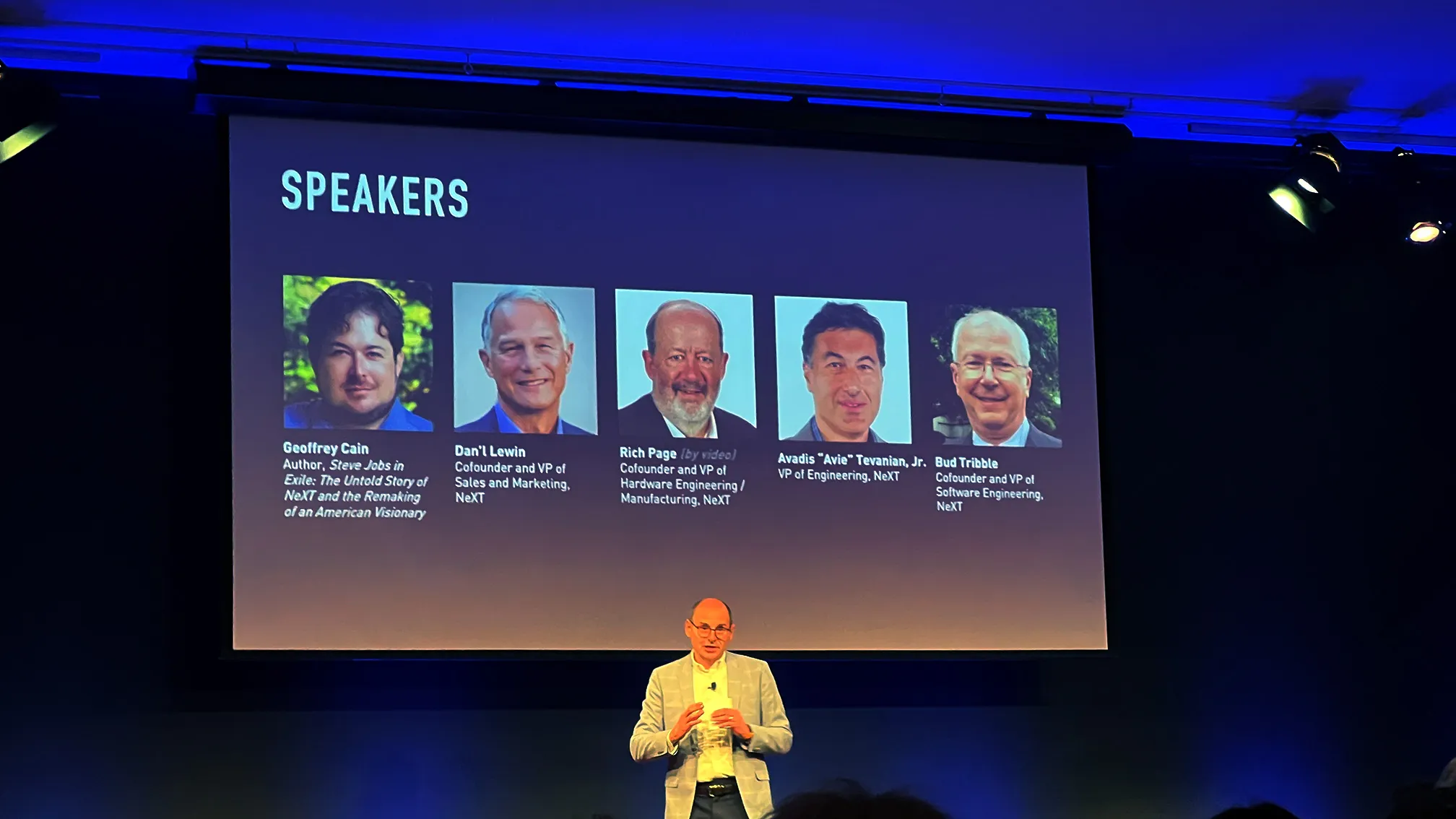
- Author Geoffrey Cain, author of “Steve Jobs In Exile”
- Dan’l Lewin, Cofounder and VP of Sales and Marketing, NeXT
- Rich Page, Cofounder and VP of Hardware Engineering / Manufacturing
- Avadis “Avie” Tevanian, Jr. VP of Engineering, NeXT
- Bud Tribble, Cofounder and VP of Software Engineering, NeXT.
Thoughts and Impressions
Here are the things that stood out to me during the event.
1. Attending the event
I’m fascinated by how the things we take for granted with computers were invented. It’s easy to think of computer history as being in the distant past. Each time I attend an event at the Computer History Museum, I’m reminded that there’s very little that separates the present from the inventors of the past. About a third of the crowd were NeXT alumni, and it was clear they were proud of having been a part of history. I’ll admit, I’m more than a little jealous of what they were able to build.
2. Amazing work Mr. Rand
I really enjoyed seeing the NeXT logo designed by Paul Rand in the crowd.
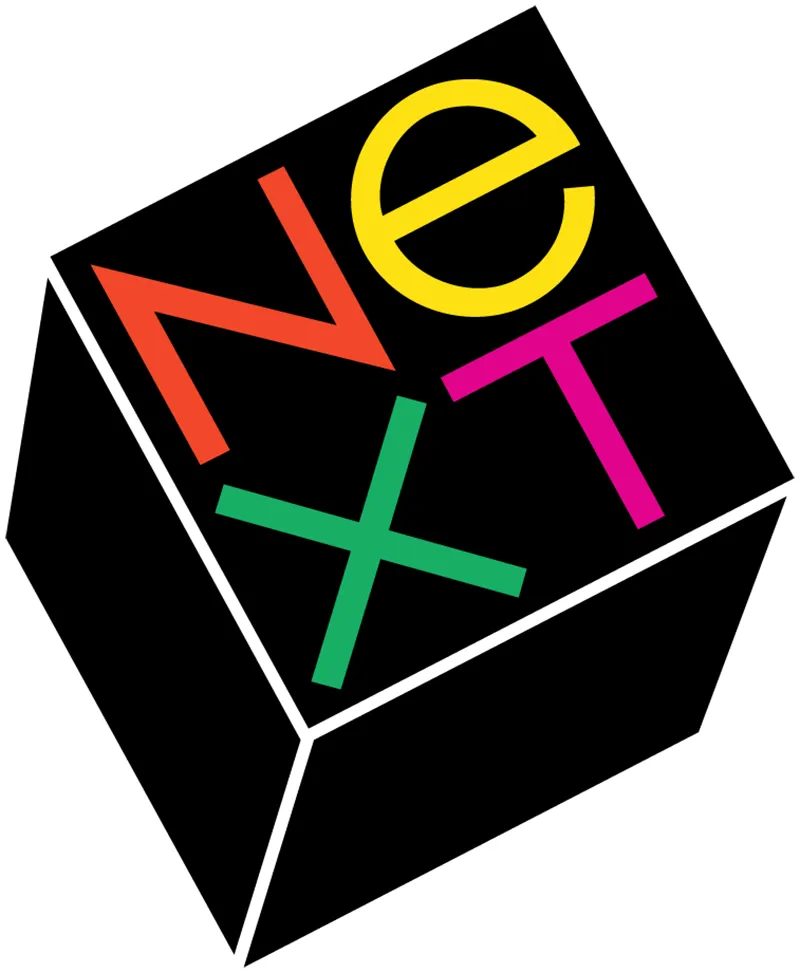
Here’s a video of Rand delivering his work to the NeXT team. Famously, he’d deliver his design in a book that walks the audience through what’s at stake in creating a mark that sums up the company and its aspirations. Rand charged $100,000 for one logo whether Jobs decided to use it or not. It’s hard to fathom just how good Rand had to be to dictate these terms and pull it off as well as he did.
3. Interpersonal computing
A few attendees had sweatshirts with “interpersonal computing” messaging on the back — alluding to the importance of using computers for connection, communication, and collaboration. It’s a good reminder of just how many computer inventions we take for granted today, but also feels like Jobs and NeXT were fighting to find the messaging that would stick.
4. The leap of faith and the cost of joining NeXT
Joining NeXT and Jobs was a leap of faith for the founding team. It seemed that working for and with him came with no small amount of personal cost. NeXT was enabled by Jobs, but it was also hindered by him, and was almost killed by the worst of his impulses. By the end of NeXT all of its co-founders had moved on. I had the impression that each of the speakers felt fortunate to know Jobs and to have been part of the NeXT story.
5. So much drama and hustling
I came away with a sense that the 12 years Jobs spent on NeXT was characterized by continuous drama and hustling. There were legal battles with Apple, unreasonable timelines, crushing drama, slipped deadlines, broken alliances, existential fear, a shit ton of luck, tons of investment money to keep the whole thing going, a ton of bodies left along the journey. Despite this, the NeXT team produced something that made a dent.
6. Fallingwater field trip

Jobs took the team on a tour of Frank Lloyd Wright’s Fallingwater when taking a trip to recruit Avie Tevanian. Tribble’s comments made me think that perhaps the team didn’t come away feeling as inspired by the visit as Jobs had hoped. I think this is a good reminder of how important it is to pull from a wide range of inspiration. I suspect that Jobs and Wright would have gotten along had they been alive at the same time.
7. Antigravity and learning
Did Jobs’s ability to resist gravity and keep things going at NeXT delay his maturation and evolution? I got the impression that his financial resources and the ultra-competent people he was supported by helped sustain him until he finally matured enough to harness his talents when he returned to Apple.
8. Puzzling visionary
Steve Jobs as visionary poses so many questions. Does the creation of something new and revolutionary require the regular and sustained suspension of disbelief? Does it require hugely talented people to buy into the vision? Does it require huge reserves of FU money to weather the inevitable setbacks? Does it require using up people like they’re grist for the mill? Does it require the industry around you to evolve quickly enough so that there are opportunities for reinvention?
9. Personal dignity and a bridge too far
I was struck by Dan’l Lewin’s resolve to follow his judgment rather than just do what Jobs wanted. I have a sense that working directly under Steve Jobs must have been a constant test of a person’s values and mettle. This makes me wonder what it would have been like to work with Steve Jobs and whether I would have been able to thrive in this environment. I regret never having had the chance to find out. Even getting discarded would make for an interesting story.
10. An alternate future
There was an alternate future where NeXTSTEP becomes the default OS for IBM personal computers rather than Windows. Had Jobs been able to take advantage of the work and relationship-building that Dan’l Lewin had built up, the history of the personal computer and Apple might have been very different. I wonder what it must be like for Lewin to have to contemplate the what-ifs had Jobs been able to follow through on the IBM relationship.
11. Hardware capacity creates the space for software inovation
One consequence of being a very small player in the computer manufacturing space was that NeXT had to create the ability for software to be developed quickly and cheaply. Without this important capability, NeXT wouldn’t have been able to catch up to more established players. This very same capability made NeXTSTEP a good vehicle for Apple to reinvent itself through OS X and iOS.
Bud Tribble mentioned that NeXT’s pushing the boundaries of hardware design and capacity enabled the team to explore software capacities that enabled object-oriented programming to exist in NeXTSTEP.
12. Admiration for the Xerox Alto
During the talk Bud Tribble mentioned that in 1985, NeXT still couldn’t manufacture a computer that could run Alan Kay’s Smalltalk natively more than a decade after the Alto was created. I think this reinforces just how far ahead of its time the Alto was when it was created in 1972. This demonstrates how hardware capabilities define the possibility space. It was thrilling to see Tribble express admiration for what Alan Kay and the Xerox PARC team had created back in 1972.
13. The World Wide Web was invented on NeXT
The mention of Tim Berners-Lee creating the World Wide Web on a NeXT computer was almost a sidenote in the conversation, but it’s profound just how impactful NeXT was to the creation of the Web. I think the tidy narratives we like to create around success and failure in computer history make it very difficult for us to reach a full understanding of just how interconnected computer history is — or how impactful NeXT was, despite not succeeding as a company.
14. DOOM was created on the NeXT system
DOOM being created on the NeXT system was mentioned almost as an aside during the talk. It’s impossible to overstate what a seminal event the creation of DOOM was.
DOOM was such a quantum leap for PC gaming. DOOM ushered in the age of multiplayer deathmatch, shareware, and led to the eventual creation of Quake, and Quake 2, the first hardware accelerated game. Hardware acceleration eventually led to the rise of the GPU, which eventually powered the AI revolution.
15. Jobs discovering what’s valuable about NeXT
NeXT was originally targeted at the academic research market. The expectation was that researchers would want to write their own software. NeXT had to accelerate the creation of software because there was no other way for a small upstart computer maker to build out the required software on its own.
Jobs discovering what’s important and valuable about NeXT seemed almost unintentional. The hardware business had to collapse in order for the software to rightfully take center stage. It turns out that NeXT’s operating system was the durable thing and the enabler for Apple to reinvent itself.
This makes me wonder about the role that surprise should be playing in today’s software design process. So much of the design process seems to be oriented around preventing surprises from happening. How often do product teams discover that the thing they set out to make isn’t actually the important thing?
16. Pixar and Jobs
Pixar is another story of someone funding the creation of a thing but not understanding the value of the thing they created. George Lucas, desperate for money after a punishing divorce, sold Pixar to Steve Jobs at one-third the asking price.
The anchoring that Pixar gave Jobs and his lack of expertise in making animated films created the conditions where Pixar could shine while avoiding the collateral damage that usually accompanied Jobs.
Perhaps Pixar’s success gave Jobs a kind of foundational grounding that allowed him to let go of attempting to control every aspect of the domains in which he was acting upon.
Pixar’s Ed Catmull acted as a kind of buffer/translator that reduced the potential for the kinds of collateral damage that Jobs had inflicted on NeXT. I suspect that the leadership team Jobs gathered around himself when he returned to Apple performed a similar function.
17. Apple Act 2
I wonder whether some of Jobs’s success when he returned to Apple was a function of how much the state of computers had advanced since the Macintosh was created. Perhaps computers had to become powerful enough, capable enough, and inexpensive enough to manufacture to be able to follow through on Jobs’s taste and imagination.
It occurs to me that the sorry state Apple was in when Jobs returned may have forced him to make hard choices he was unwilling to make at NeXT. The iMac had to be aimed at the consumer market and be affordable to manufacture in order to save the company.
18. The importance of vertical integration
NeXT’s hardware efforts ultimately failed due in part to the company designing a workstation around a Motorola processor that Motorola decided to not produce. This loss of control taught Jobs the importance of vertical integration and having control over the fundamental building blocks of a computer. We can see this in Apple’s integrated approach to hardware, software, and platform today.
This makes me wonder about how we’re entering an age where increasingly no one owns the entire stack as companies scramble to incorporate AI models into operating systems. Will Apple eventually make the move to build its own chips for AI model training and inference? Will it eventually build its own foundational models?
19. “Steve Jobs In Exile” book
If you’re interested in learning more, I can recommend “Steve Jobs In Exile” by Geoffrey Cain.
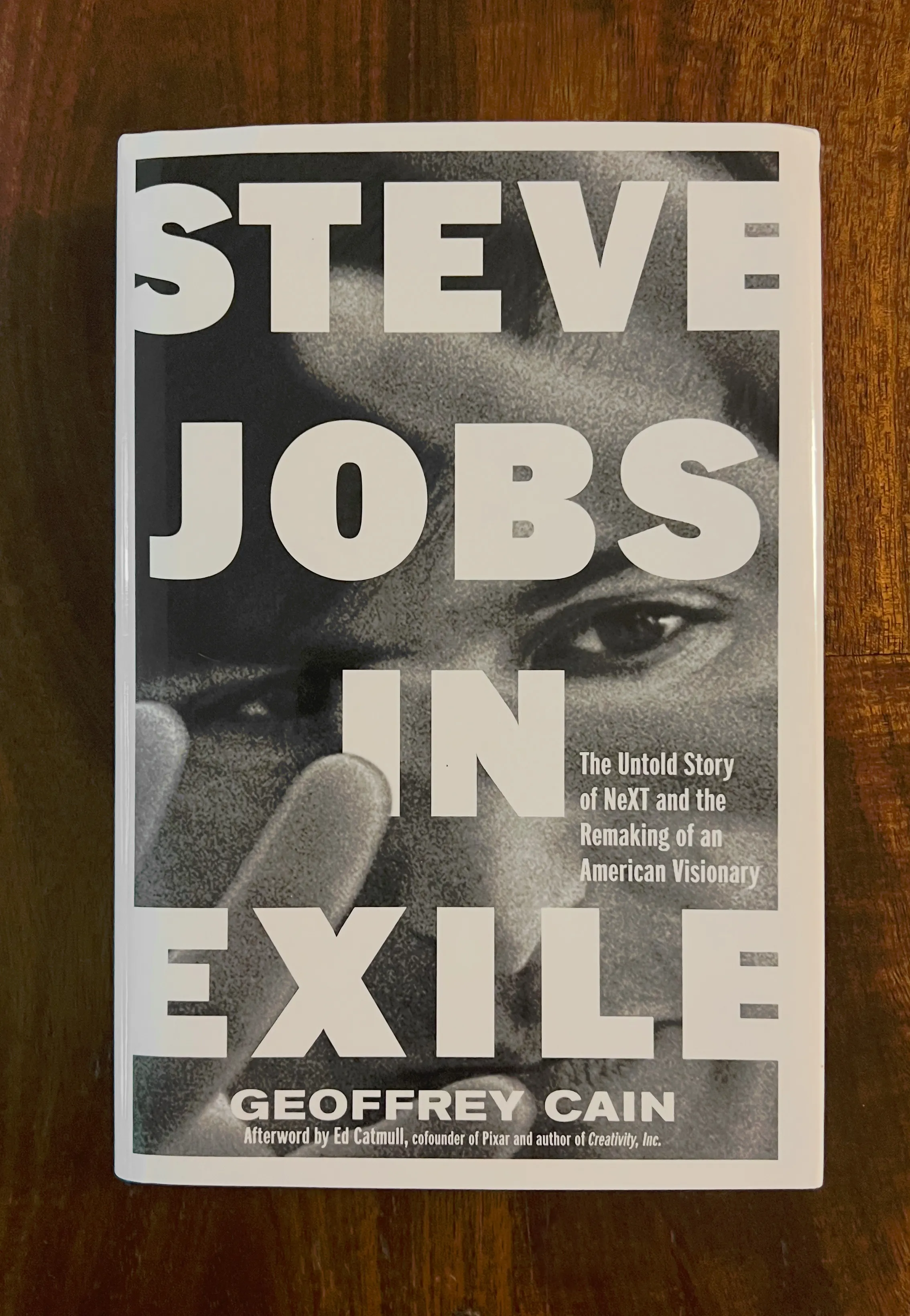
It was an enjoyable and enlightening read, but made me squirm on several occasions, thinking about what it would have been like to work for Jobs at NeXT. The book also deepened my appreciation for how much of an act of courage it must have been to build up NeXT Computer from scratch — both on the part of Steve Jobs, but especially by all of the talented folks that worked to make it a reality. The book also gave me a deeper appreciation for just how much Steve Jobs evolved and matured between the time he left Apple and when he returned.
More Reading
State of Unreal 2026
Takeaways from a recent State of Unreal presentation and they might impact CAD software for AEC.
AI's Heavy Freight
When bringing a new technology to market, how it's positioned matters. How might the computer industry shift the public's perception of AI?